Prelude oil and filter change

Alfettaman5

Member
Joined
Apr 24, 2026
Messages
33
Reaction score
31
Last login streak
5 day(s)
Max login streak
5 day(s)
Location
Suffolk, UK
My lovely new Prelude is three weeks old today and has rolled over 500 miles in total! :)

Modern engines are built to very fine tolerances and don’t really need to be ‘run in’, the way that they did years ago. But that doesn’t necessarily mean that a new engine is free from tiny bits of manufacturing ‘debris’. Indeed, oil analysis on new engines usually shows elevated levels of copper, aluminium, iron, etc – as well as traces of silicone sealants in the oil:


So I’ve just done an engine oil and filter change, to get rid of any of these ‘wear metals’ and other contaminants that could be present. The oil change was a straightforward process, and much the same as for my Honda CR-V hybrid. If you wanted to do the same, here’s how…
  1. In the engine bay, remove oil filler cap and dipstick
  2. Remove aluminium under-tray beneath engine. 4x metal quarter-turn fasteners, 4 cross-head M6 machine screws, slide cover backwards and off it comes. Access is now excellent
  3. Have drain pan ready! 7+ litres capacity is good
  4. Remove sump plug counter-clockwise (on my car the words ‘engine oil’ are cast into the sump right next to the plug) using a 17mm AF socket. Check that the M14 aluminium crush washer has come off with it, and isn’t stuck to the sump. Catch oil in drain pan and leave it to drain completely
  5. Locate engine oil filter near front of engine and unscrew counter-clockwise. I use an oil filter removal cap like this..
    Oil filter cap.webp
    ...which makes it really easy. Similarly make sure that the rubber sealing ring has come off with the filter and is not stuck to the engine
  6. Clean around the sump plug hole and the filter seat on the engine. Replace the sump plug by hand, using a new M14 aluminium crush washer. Now torque the plug to 39 Nm (29 ft.lb)
  7. Prepare the new filter by smearing its sealing ring with clean engine oil and check that the sealing ring is seated evenly on the filter. Pre-fill the new filter with clean engine oil and screw it back on by hand. If you have a filter cap tool and a suitable torque wrench, tighten the filter to 10-14 Nm (7-10 ft.lb). Alternatively just tighten securely by hand.
    Low range torque wrench and filter cap.webp
  8. Back in the engine bay, add fresh oil through the filler: I used a funnel so as not to spill any on the engine. Use dipstick to check progress. Initially I put in 4 litres (4.2 US quarts), which got the reading on the dipstick pretty close to the ‘max’ mark. Replace filler cap, start engine, allow to run for half a minute, switch off, check for leaks on sump plug and oil filter
  9. Replace aluminium undercover using 4x machine screws and 4x quarter-turn fasteners
  10. Recheck oil level on dipstick and top up to exactly ‘max’ mark. Doing this makes it easier to monitor whether your car is using any oil. Take your time and don’t overfill! My car took 4.2 litres (4.4 US quarts) in total.

I didn’t reset the service indicator, because this is an extra oil service and not part of the standard Honda schedule.

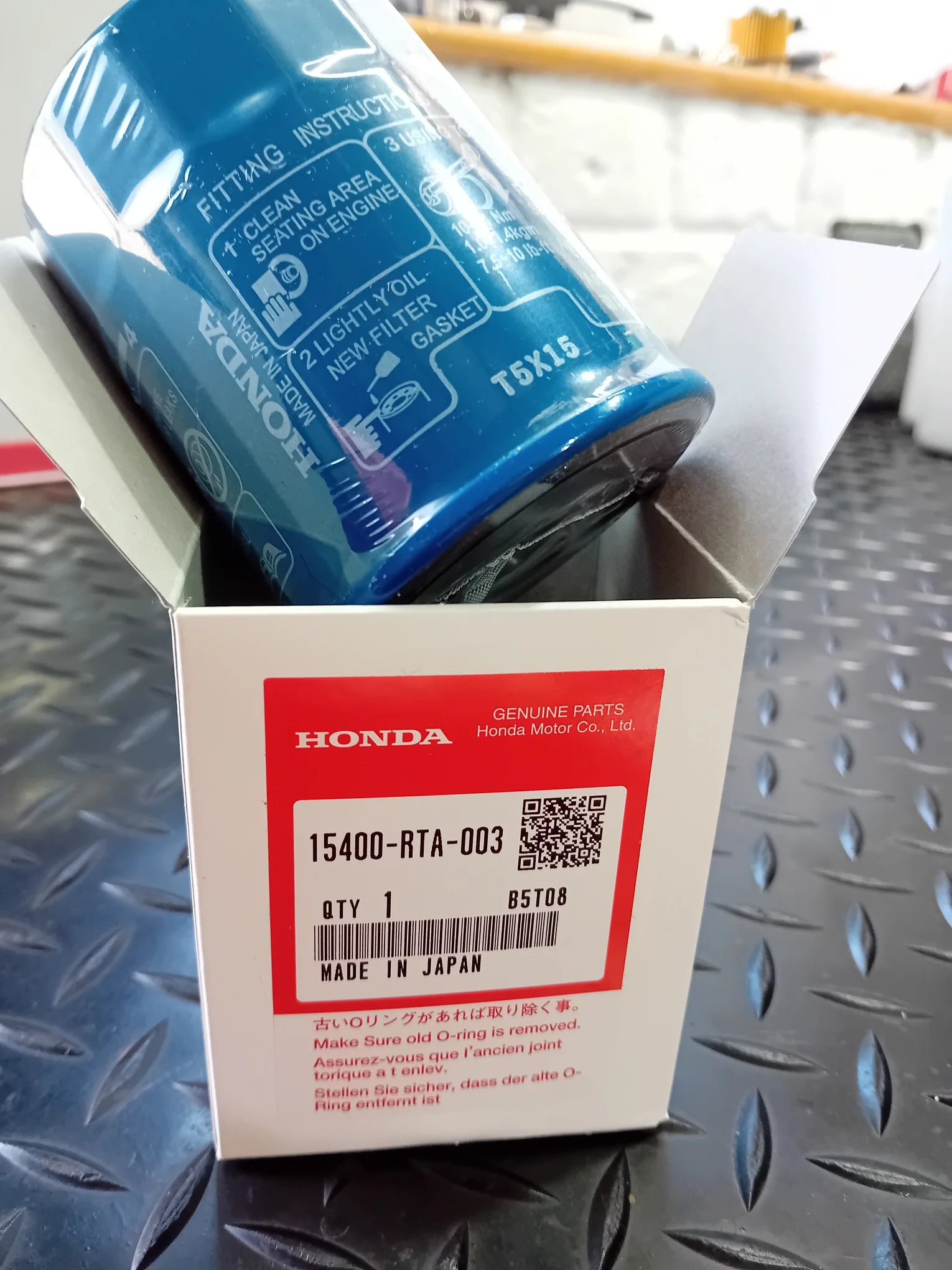
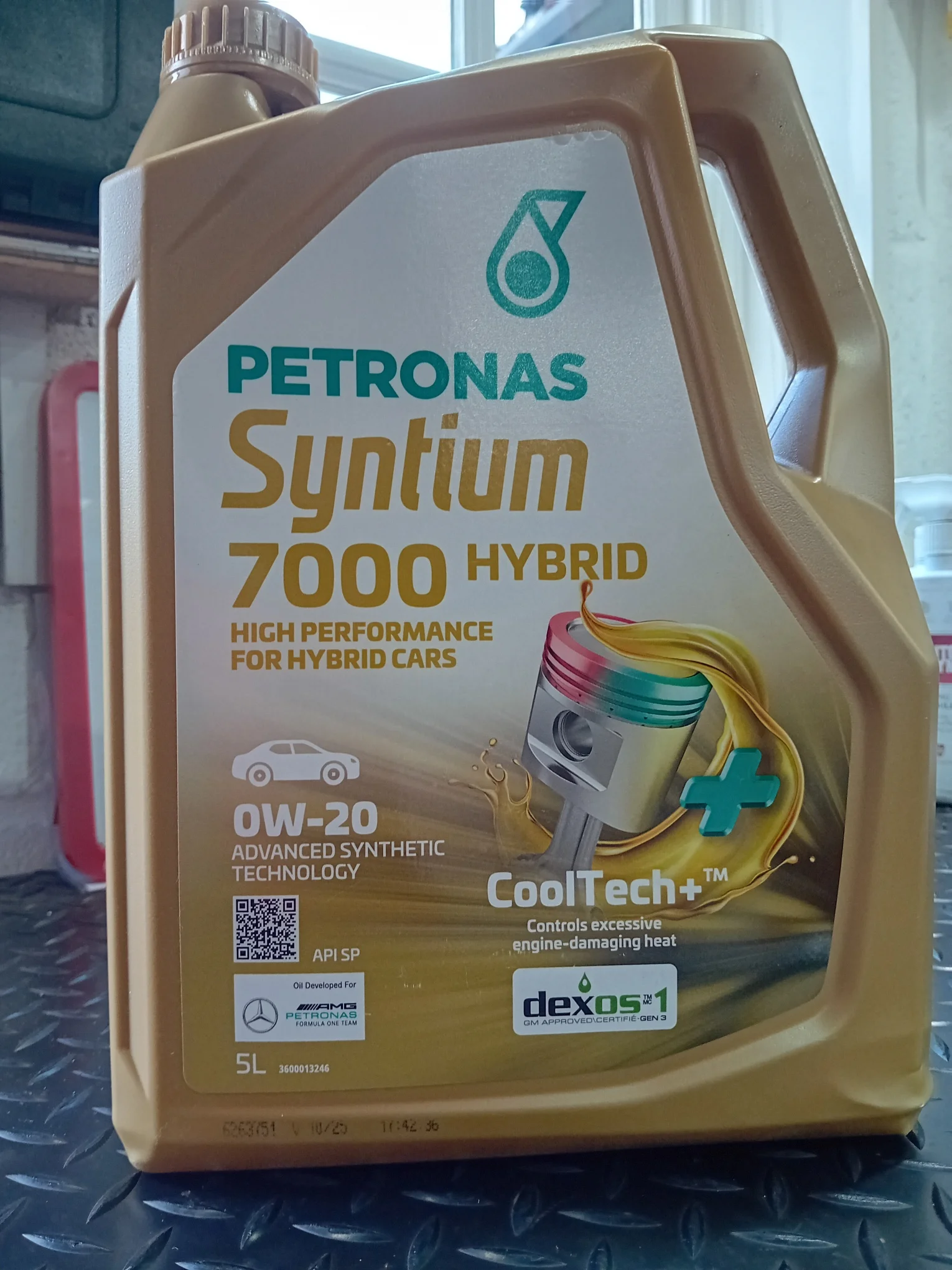
Honda UK specify a 0W-20 oil that meets API service SP or ACEA C5. I used Petronas Syntium 7000 Hybrid 0W-20 and a genuine Honda filter, part number 15400-RTA-003
petronas-oil-webp.266


oil filter.webp


With any residual manufacturing contaminants now removed, I feel a bit more confident driving my new car con brio😎
 

Attachments

  • Petronas oil.webp
    Petronas oil.webp
    217.9 KB · Views: 18
One further thought on oil changes...

1. Don't use the original 'Honda hybrid green oil'. This was formulated for the earlier (IMA Hybrid) Honda engines fitted to the CR-Z, Insight, etc from 15 years ago and is not suitable for the iMMD hybrid engines in our Preludes!

Screenshot 2026-06-02 at 15.57.47.webp
 
How did the oil look? Did you run a magnet through it, or send it off? Break in is such a controversial thing these days.
 
How did the oil look? Did you run a magnet through it, or send it off? Break in is such a controversial thing these days.

The thin film of oil on the dipstick looked really clear: it was actually quite hard to see the oil level. But the oil in the drain pan looked darker than I was expecting from a brand-new engine with only 500 miles, so I'm really glad I changed it.

I didn't bother sending a sample off for analysis this time, as there is ample evidence (from professional tribologists like Lake Speed) that the oil in a new engine will almost inevitably contain elevated levels of 'wear metals', traces of silicone and other contaminants from the manufacturing process.

I always use a spotlessly clean open-topped drain pan (it's actually sold as a cat litter tray!) and leave the old oil to stand/settle for an hour before very gently emptying it into my waste oil drum. The thin-film of oil remaining on the bottom of the tray can then be examined for visible particles, shrapnel and debris. If I find any, I try lifting it out with a magnet. If it's not magnetic, I'll squeeze it between thumb and finger: soft, dark and crushable? Probably a harmless carbon deposit. Hard, sharp or glittery? Maybe a non-ferrous metal particle.

In this first oil change on my Prelude, there was nothing visible in the bottom of the pan at all.

---------------------​

The old-fashioned break-in process used to serve two purposes: to hone and wear in the relatively 'tight' moving surfaces (bearings, piston rings, valve guides), and then to remove contaminants with an early oil change.

Modern engines are so finally toleranced that the honing process is not really needed any more. With that in mind, it's probably more helpful to think of it as 'decontamination' of a new engine rather than 'break-in'.

So I don't think break-in is necessarily a controversial subject - perhaps just a misunderstood one! :)
 
The thin film of oil on the dipstick looked really clear: it was actually quite hard to see the oil level. But the oil in the drain pan looked darker than I was expecting from a brand-new engine with only 500 miles, so I'm really glad I changed it.

I didn't bother sending a sample off for analysis this time, as there is ample evidence (from professional tribologists like Lake Speed) that the oil in a new engine will almost inevitably contain elevated levels of 'wear metals', traces of silicone and other contaminants from the manufacturing process.

I always use a spotlessly clean open-topped drain pan (it's actually sold as a cat litter tray!) and leave the old oil to stand/settle for an hour before very gently emptying it into my waste oil drum. The thin-film of oil remaining on the bottom of the tray can then be examined for visible particles, shrapnel and debris. If I find any, I try lifting it out with a magnet. If it's not magnetic, I'll squeeze it between thumb and finger: soft, dark and crushable? Probably a harmless carbon deposit. Hard, sharp or glittery? Maybe a non-ferrous metal particle.

In this first oil change on my Prelude, there was nothing visible in the bottom of the pan at all.

---------------------​

The old-fashioned break-in process used to serve two purposes: to hone and wear in the relatively 'tight' moving surfaces (bearings, piston rings, valve guides), and then to remove contaminants with an early oil change.

Modern engines are so finally toleranced that the honing process is not really needed any more. With that in mind, it's probably more helpful to think of it as 'decontamination' of a new engine rather than 'break-in'.

So I don't think break-in is necessarily a controversial subject - perhaps just a misunderstood one! :)
I don't doubt what you're saying, I'm mostly of the same mind. Where it gets messy is that Honda has explicitly said not to change oil early at times. Some have claimed this is because the oil has a larger amount of moly initially. Though to make things more confusing they don't have that "no early lil change" warning in the manual of any e:HEV vehicles that I can find, but it does appear in some of the older models.

Always wondered why manufacturers are so sheepish to be clear on such things, it causes eternal internet arguments. For me, my dealer has hinted at being willing to do an early oil and filter change for a reasonable rate, so if they hold true to that I'll probably take it in when I get back from my road trip at which point there'll be about 2,500 miles on the clock.

On the other hand, the Prelude's manual DOES mention a break-in period of 600 miles.
Screenshot_20260602_221937_Adobe Acrobat.webp
 
Last edited:
I thought the factory oil was specially formulated for initial engine operation?

I trust Honda’s ‘maintenance minder’ with all oil warnings and don’t believe Honda would sacrifice long-term reliability by falsely hiding the need for an early oil change.

My CR-Z would trigger about every 11,000 miles.
 
Interesting (and a bit perplexing) that Honda specify a break-in period, but then leave the oil change until 10k miles! The oil in my Prelude was quite heavily discoloured/contaminated after 600 miles, So I'm really glad I drained it out.

We need to remember that Honda only need to get the car through it's warranty period (3 years in the UK) and minimising the servicing cost during those three years helps them to sell more cars. So there's potentially some divergence between what's best for the car and what's best for Honda...
 
Interesting (and a bit perplexing) that Honda specify a break-in period, but then leave the oil change until 10k miles! The oil in my Prelude was quite heavily discoloured/contaminated after 600 miles, So I'm really glad I drained it out.

We need to remember that Honda only need to get the car through it's warranty period (3 years in the UK) and minimising the servicing cost during those three years helps them to sell more cars. So there's potentially some divergence between what's best for the car and what's best for Honda...
7 years now I think, they're offering rolling warranty extension if you service it with a main dealer soon.
 
The new extended UK warranty scheme started on 1st June 2026 and is for 8 years max, subject to dealer servicing. Interestingly though, this extended warranty is limited to 100,000 miles.

The standard UK warranty is currently 3 years/90,000 miles, but is already 8 years/100,000 miles on the high voltage battery and 5 years/90,000 miles on the rest of the hybrid/electric power-train. So it's debatable how valuable the (potentially) 8 year warranty really is. In the small print Honda also reserve the right to "... apply additional exclusions during the extension period."

Eligibility for the new scheme is back-dated to cover all Honda cars first registered from 1 April 2026 onwards. In reality, it doesn't really start until your third annual service (in 2029), which effectively buys you a 'year 4' warranty.
 
The new extended UK warranty scheme started on 1st June 2026 and is for 8 years max, subject to dealer servicing. Interestingly though, this extended warranty is limited to 100,000 miles.

The standard UK warranty is currently 3 years/90,000 miles, but is already 8 years/100,000 miles on the high voltage battery and 5 years/90,000 miles on the rest of the hybrid/electric power-train. So it's debatable how valuable the (potentially) 8 year warranty really is. In the small print Honda also reserve the right to "... apply additional exclusions during the extension period."

Eligibility for the new scheme is back-dated to cover all Honda cars first registered from 1 April 2026 onwards. In reality, it doesn't really start until your third annual service (in 2029), which effectively buys you a 'year 4' warranty.
Ah so anything that breaks will be mysteriously excluded, right?
 
Here are just some of the exclusions in the new 8 year Service Activated Warranty. Personally, I Don't think I'll be bothering with it...

8 Year Service Activated Warranty Terms - Automobile - HME-UK.pdf - 8_Year_Service_Activated_...webp
 
Here are just some of the exclusions in the new 8 year Service Activated Warranty. Personally, I Don't think I'll be bothering with it...

View attachment 283
Wow yeah I thought it was fine until I got about half way down. No coverage for the cat or GPF, in car entertainment systems, it just goes on and on. Seems like the only things that actually fail that'd be realistically covered are sensors and the electric motors. Near enough everything on that list should last at least 8 years, so it's a little insulting to exclude it.
 
Smuggling the entire wiring loom in under "Consumables" seems a bit cheeky too.

Also, they exclude "weatherstrips and seals" and then anything "resulting from water ingress". Very neat...
 
On the subject of oil changes, the (UK) manual states 6,000 miles. But Honda UK and dealers are saying 12,500 miles or one year 🤔.

That seems rather too long between oil changes to me, but on the other hand the engine isn’t running all the time.
So 🤷🏼‍♂️
 

Trending content

Back
Top